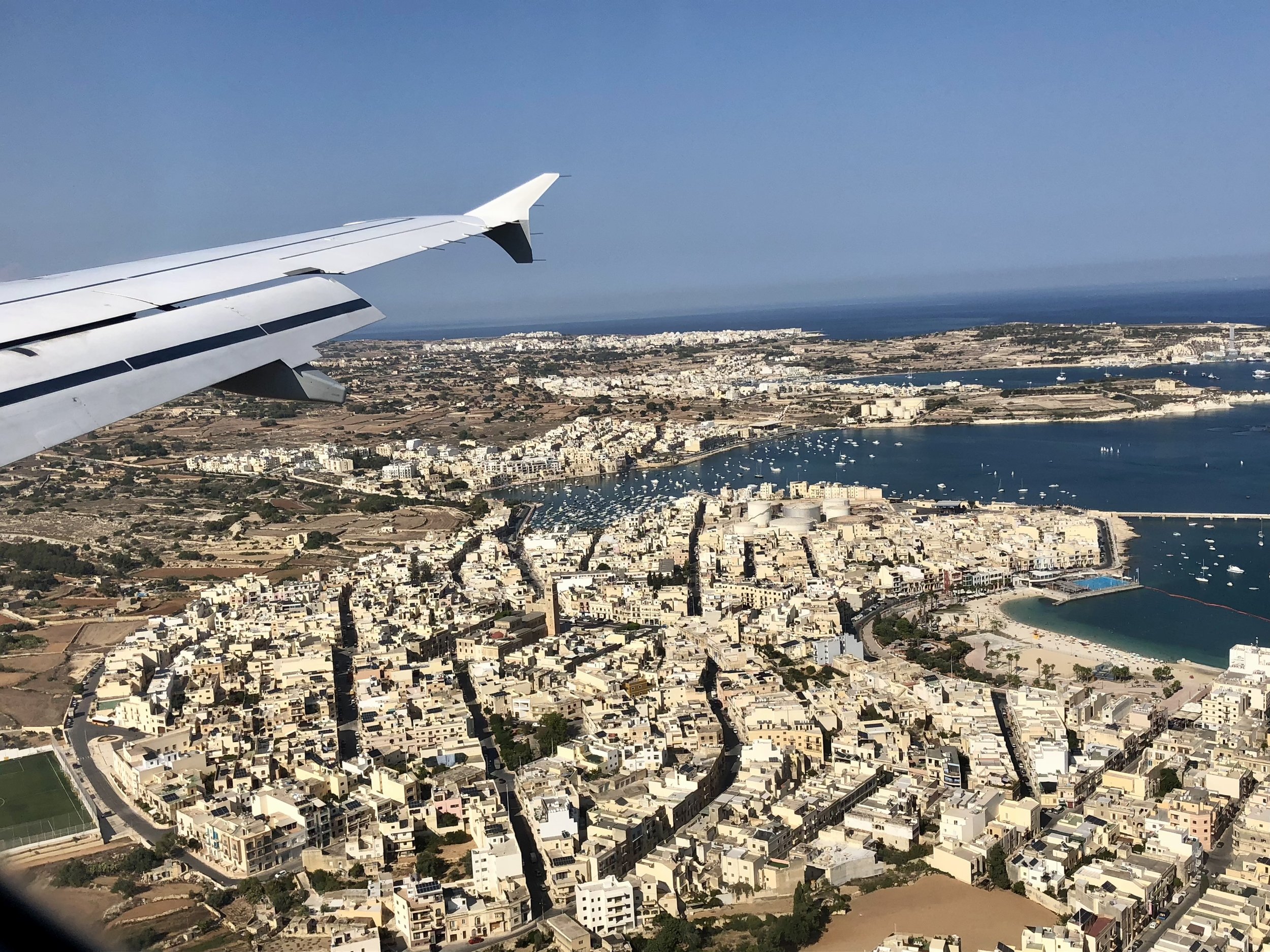
Let's be honest: for us economy travelers long-haul flights aren’t glamorous excursions. You're sitting for hours, you're probably a little dehydrated, and the meals are subpar. But after numerous long-haul and overnight flights (including flights from the UK to South Africa, SFO to Tahiti, SFO to Singapore, LAX to Fiji, SAN to Tokyo, and numerous flights to and from the USA to Europe), we've landed on a routine that gets us off the plane feeling refreshed and ready to explore. And no, you don't have to fly first class to enjoy the journey (although, if someone wants to upgrade us, we're certainly not turning it down).
The quick version (if you only read one thing):
Pay for premium economy on flights over 5 hours. It's the best comfort-per-dollar upgrade there is and the extra leg room is worth it.
Find a sleep routine that works for you, but try to plan your sleep around your destination's time zone, not the one you left.
Hydrate like it's your job. Bring a refillable bottle and add electrolytes.
Disclosure: Some links in this post are affiliate or referral links. If you buy or sign up through them, we may earn a small commission or bonus at no extra cost to you. We only recommend things we actually use.
Part 1: Before You Fly
Most of your comfort is decided before you ever board. Here's where we focus.
Pick your seat like a pro
Check your airplane seat set up. There are many different seat set ups depending on if you are flying Airbus or Boeing. Scope the set up ahead of time (is it a 2-3-2 seat layout, 3-3-3, 3-4-3, etc.). Knowing the layout can help you find the best available seats for you. Need help? Check out seatmaps.com.
Stay at least 3 rows away from the lavatories and the galley. You'll avoid the line of people, the flushing, and the clatter of carts all night. If you’re sensitive to noise, this can be the difference between sleeping or not sleeping.
Consider the bulkhead in economy, especially if there's no lavatory next to it. You get extra legroom and no one reclining into you. The trade-offs: armrests usually don't lift, your bag goes overhead during takeoff and landing, and bassinets (and babies) are often placed there. However, typically more leg room and no one reclining their seat into your lap.
The aisle vs. window debate
The age-old flying question: aisle or window?
We're convinced there's no universal winner here. Let’s be honest this is a personal preference.
Team Window: You have somewhere to rest your head, control the window shade (within reason), and don't have to worry about people climbing over you. Tends to be quieter, but you may not be able to get up as much as you would like to. Probably the better move for trying to sleep.
Team Aisle: You can stretch a little bit more (just don’t be that person that hogs up the aisle while people are trying to get by), get up whenever you want, and visit the restroom without having to perform an awkward gymnastics routine over a sleeping stranger. However, it tends to be a little more busy and noisier as people walk up and down the aisles.
For an overnight flight where sleep is our priority, Ash appreciates a good window seat to settle in and prop up. Matt on the other hand, prefers an aisle seat to be able to get up and down as he wants. Matt is also a heavier sleeper so the noise and people walking up and down the aisle don’t bother him as much. As a couple, we typically will book an aisle and a window seat and hope that the flight isn’t full. If someone sits in the middle then one of us will take the middle seat and hopefully make someone’s day by offering them the window or the aisle.
If you're traveling as a couple, check the aircraft's seating configuration before booking. Some planes offer pairs of seats along the sides, which can be a fantastic setup (honestly sometimes its a better set up than premium economy).
**Lastly, double check to see if any of the seats show as “limited” or no recline - typically these will be the exit row or just in front of the exit row. These seats will not recline and can really impact your ability to sleep. HOWEVER, it can be a great idea to sit directly behind these seats because no one will be reclining in your lap, another potential economy class hidden gem.
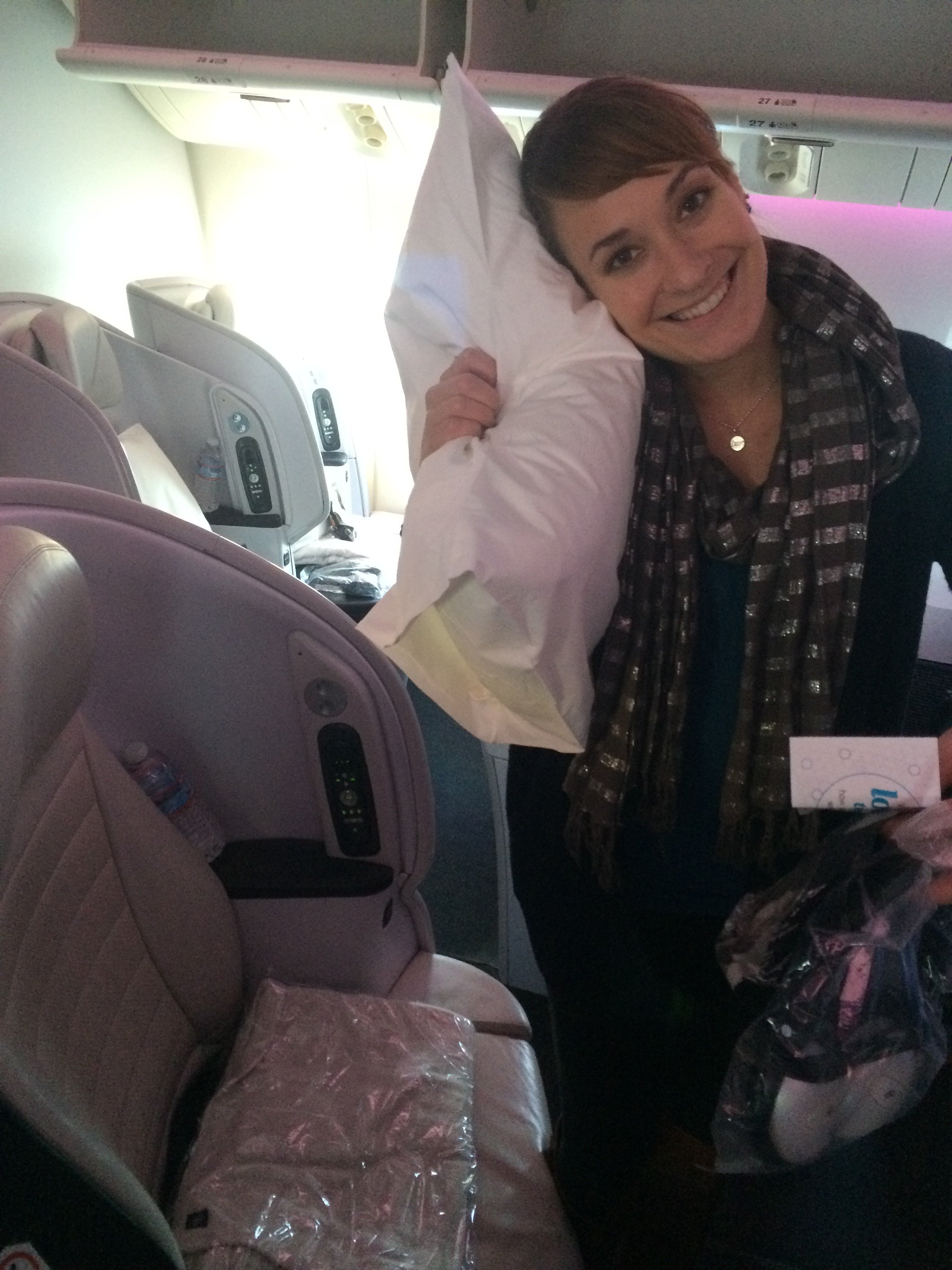
What about upgrades?
If you're hoping to score a free upgrade with status, here's the real version: unless you're a super-elite member, the odds are slim. Hope for an upgrade is not a great strategy if you barely have status, even if you have the airline credit card. Neither of us have high status because we aren’t overly loyal airline flyers (sorry United!), however when we were United Gold Status, we may have been upgraded two or three times over hundreds of flights. This isn’t a complain on United (we love United), but just goes to show that unless you have upper tier status, hoping to score an upgrade with status is most likely more of hope than strategy.
Our rule of thumb is simple (and for the record, neither of us is over 6 feet, so your math may be different):
Flights over 5 hours: we pay for premium economy (most of the time). It's almost always worth the extra cost for the legroom and wider seat.
Business class: only when we find a great deal, either a cash sale or a points redemption that doesn't take a spreadsheet to figure out. Even though we fly a lot, this is super rare for us.
The lazy traveler's way to "upgrade"
If you are planning on booking an economy ticket hoping to get a status upgrade or point upgrade, we have found these to highly unlikely for popular routes, unless you happen to be in the highest status tier for that particular airline (see above). Rather than simply hoping for an upgrade, we recommend looking for easy point deals to upgrade ahead of time before you book. We are not hyper spreadsheet airline miles people, but prefer to set up alerts to find miles to book upgraded flights.
What works for us is a flexible travel card that isn't tied to one airline. We use the points to book the comfier seat outright, and lounge access turns a layover into a mini-vacation instead of a survival test (trust us, we have had some exceptional naps in international lounges). For casual travelers, the Capital One Venture or Venture X and the Chase Sapphire Preferred or Sapphire Reserve are easy starting points. Do your research first and make sure you will use the benefits before committing. These are the two cards we recommend to family and friends and we both have and use these cards. [Note: if you click on the links and sign up we may receive a small points bonus]
Want the full, zero-stress setup? Our Lazy Traveler's Guide to Credit Card Rewards is coming soon.
Join the rewards program (it's free)
Sign up for the frequent flyer program of every airline you fly. It costs nothing, and even if you never fly that airline again, the miles can come in handy through partner airlines. There are some exceptions to signing up for EVERY airline rewards program. For example if you normally fly United Airlines and are flying on Lufthansa on a rare occasion, we’d recommend adding your United Airlines (MileagePlus) number instead of signing up for Lufthansa’s Miles & More program. This way you still get the miles, but add them to your major airline that you normally take.
The night before
Download your entertainment. Movies, shows, podcasts, and playlists. Don't count on seatback screens or Wi-Fi. We’ve had a few flights where the in-flight entertainment didn’t work in our particular seat or had to be reset multiple times throughout the flight. Best to have your own entertainment just in case.
Pre-order the vegetarian meal. We aren't vegetarian, but we find these meals easier on the stomach. Bonus: special meals are often served first. Ash also skips the bread and often times the breakfasts offered and brings her own granola bars or banana to avoid additional bloat discomfort.
Prep your body. We usually take electrolytes and a vitamin C supplement the night before. That's just our routine, not medical advice.
Part 2: On the Plane
Once you're in your seat, the goal is simple: arrive rested, hydrated, and somewhat in sync with local time.
Map out your sleep
Before takeoff, we look at what time it is at our destination and try to plan when we'll sleep (Hot Take: ANY sleep is better than no sleep, but we call this “ideal” sleep). Waking up close to a normal morning hour at our destination makes the first day so much easier. In addition, stay up until a normal bedtime hour once you arrive in country.
On a long flight, however; some sleep is better than no sleep. We learned that there's no single right way to survive a long flight. Here's proof:
Matt: Typically watches two movies, has a drink or two (wine helps me fall asleep), then commits to a dedicated block of sleep.
Ash: Tries to fall asleep quickly. She might watch one movie, then naps. On some flights she packs her own dinner and snacks.
Hydrate, hydrate, hydrate
Cabin air is extremely dry. We bring refillable water bottles, fill them after security, and sip constantly. Ask the flight attendants for refills; they're happy to help. Most times they will have additional water bottles available in the food prep areas and in the back of the plane where you can grab your own. Hydrating will also help you sleep more soundly vs waking up coughing with a dry throat struggling to breathe. Trust us, not peeing on a 10 hour flight is not a badge of honor.
Move every hour or two
Get up, walk the aisle, and do a few easy mobility moves: ankle circles, calf raises, and a gentle stretch near the galley to alleviate soreness. Your legs (and back) will thank you when you land.
Take care of your skin
We pack a small kit with lotion, a face moisturizer, and blotting sheets. A quick refresh before landing makes a big difference in how you feel walking off the plane.
Part 3: Gear — Pack This, Skip That
You don't need a suitcase full of gadgets. Here's what we've tested, what earned a spot in our carry-on, and what didn't.
Our swaps
Skip This: U-Shaped Neck Pillow
Pack This: A flat travel pillow and a hoodie
The U-shape actually hurts our necks. A flat pillow against the window or tray table, plus a hoodie for support and warmth, works far better. [ADD PRODUCT LINK]
Skip this: Compression socks
Pack This: Leg Hammock
Compression socks feel too constricting on our legs. Lots of travelers swear by them, so try a pair if you're curious, but they're not for us. [ADD PRODUCT LINK] We would say skip, but make sure you are moving your legs and stretching. If you find a good pair that works for you then wear them.
Ash is a big fan of a leg hammock and moving every 2 hours. The leg hammock helps her sleep a little better and helps her knees.
Skip This: Relying on airline earbuds
Pack This: Noise-canceling headphones
Engine noise is exhausting over 10+ hours. Good headphones are the single best gear upgrade we've made, not the mention the free ones are anything but comfortable.
Always in our carry-on
Eye mask: a game changer for sleeping with cabin lights on.
Earplugs: backup for when the headphones come off to sleep.
Leg hammock: hooks over the tray table so you can elevate your feet.
Refillable water bottle: see "hydrate like it's your job."
Skin kit: lotion, moisturizer, lip balm, blotting sheets. We like this all in kit as an example, but find the brand that works best for you.
Tummy Drops: Trust us these come in handy if you have any type of uneasy stomach from flying.
Comfortable, breathable clothes and layers: cabins swing from hot to freezing.
Carry on Luggage: We are huge fans of Samsonite. We normally beat up our luggage, but we’ve had our Samsonite luggage for 3 or 4 years now and it is still in great shape.
Honorable Mention: Is lounge access worth it?
For most long-haul trips, yes. A quiet seat, a real meal, a shower (available at some lounges), and a calm place to recharge before a 10-hour flight make the whole journey better. Decompressing in an outdoor lounge in Quito, grabbing breakfast and coffee while in Auckland, New Zealand, napping in a Lufthansa lounge for hours before our next flight, lounges have really been a life saver for us and make the travel experience that much better. One of my favorite showers was after a long haul flight from Tokyo to San Francisco in a lounge while waiting for the next leg of my flight. While not all lounges are the same, overall they can really elevate your travel experience. This is where having a higher end travel card can REALLY come in handy. Personally, I don’t think I would pay $50+ for a single lounge pass, but if you don’t have a credit card that grants you lounge access, and you have a really long layover, it may be the best money you spend during your trip (but do your research on the lounge first!).
The Bottom Line
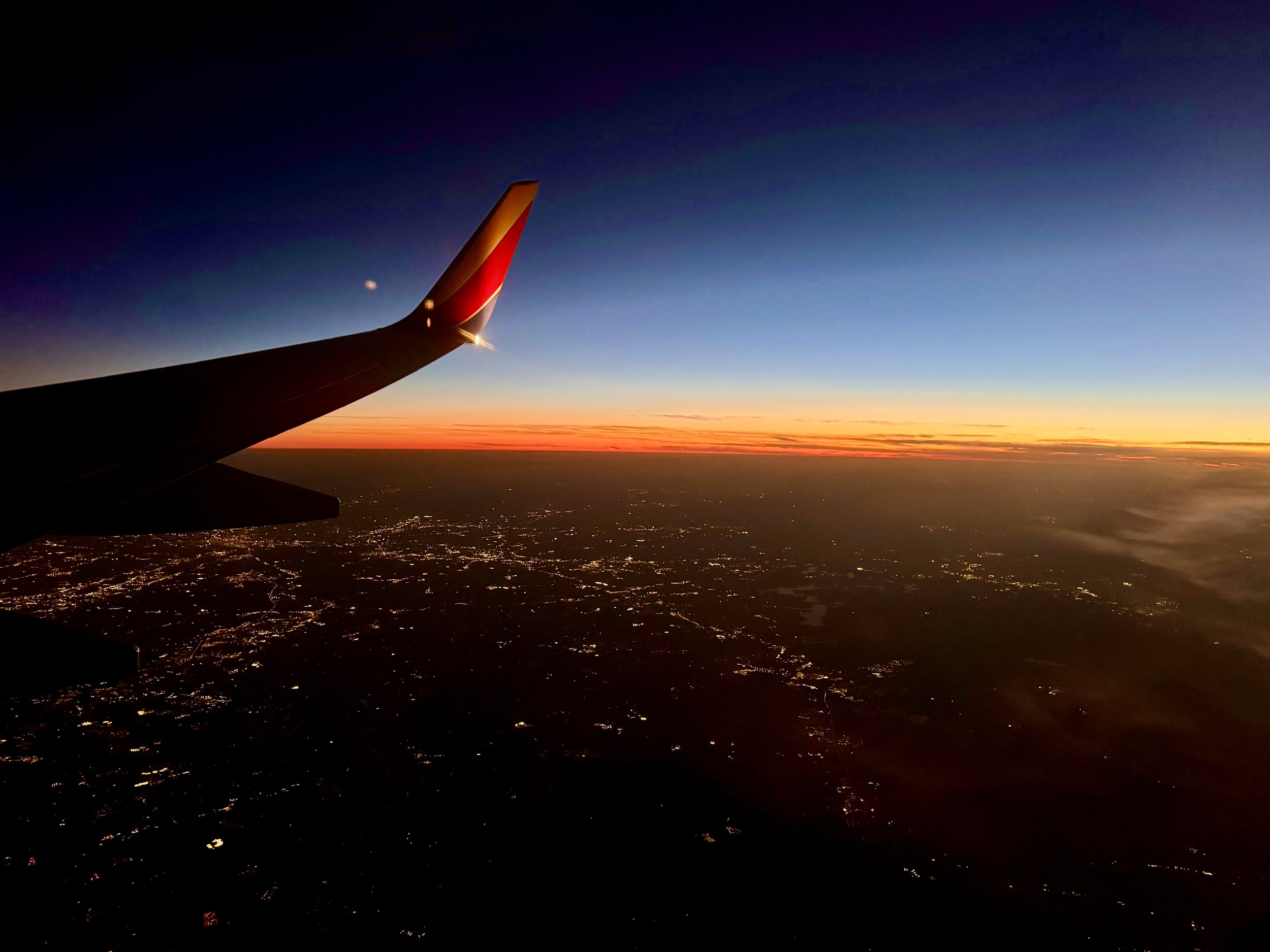
You don't need first class to arrive feeling human. Pick a smart seat, splurge on premium economy when it counts, plan your sleep around where you're going, and pack a few pieces of gear that actually work for you.
Heading somewhere far? These long flights are worth it for destinations like an epic trip to New Zealand, enjoying your first time in Japan, or finding your next travel destination in Germany.
Disclosure: This post contains affiliate links, which means we may earn a small commission (at no cost to you) if you book or purchase through our links. We only recommend things we’ve personally used and loved. Thanks for supporting our blog!
Unfortunately, things can and do go wrong when you travel. World Nomads offers coverage for more than 150 activities as well as emergency medical, lost luggage, trip cancellation and more.



Planning a London trip? Here are the best day trips from London, from Stonehenge and Bath to the White Cliffs of Dover, with tips and booking links.